 MarineVerse Blog
From VR to Real Water: How Sea Scouts Used MarineVerse for Winter Sailing Training

Ahoy!
I’m Greg, CEO of MarineVerse, and today I’m excited to share a story that’s particularly close to my heart.
Growing up in Poland, I was part of a Sea Scouts group. We’d huddle together during the long winter months, studying knots and navigation theory from books, dreaming of the moment we could finally get back on the water. The passion was there, but the ability to actually practice sailing during winter simply wasn’t. (Read the full origin story here.)
So when I learned that Don Goff, Ph.D. - a retired IT professor from the University of Maryland and a Sea Scout leader in Chicago - had been using MarineVerse Sailing Club for winter training with his Sea Scout Ship, I asked him to share his experience.
Here is Don’s experience report.
VR Sailing Assessment - Sea Scout Ship 2028 S.S.S. Polaris
By Don Goff, Ph.D.
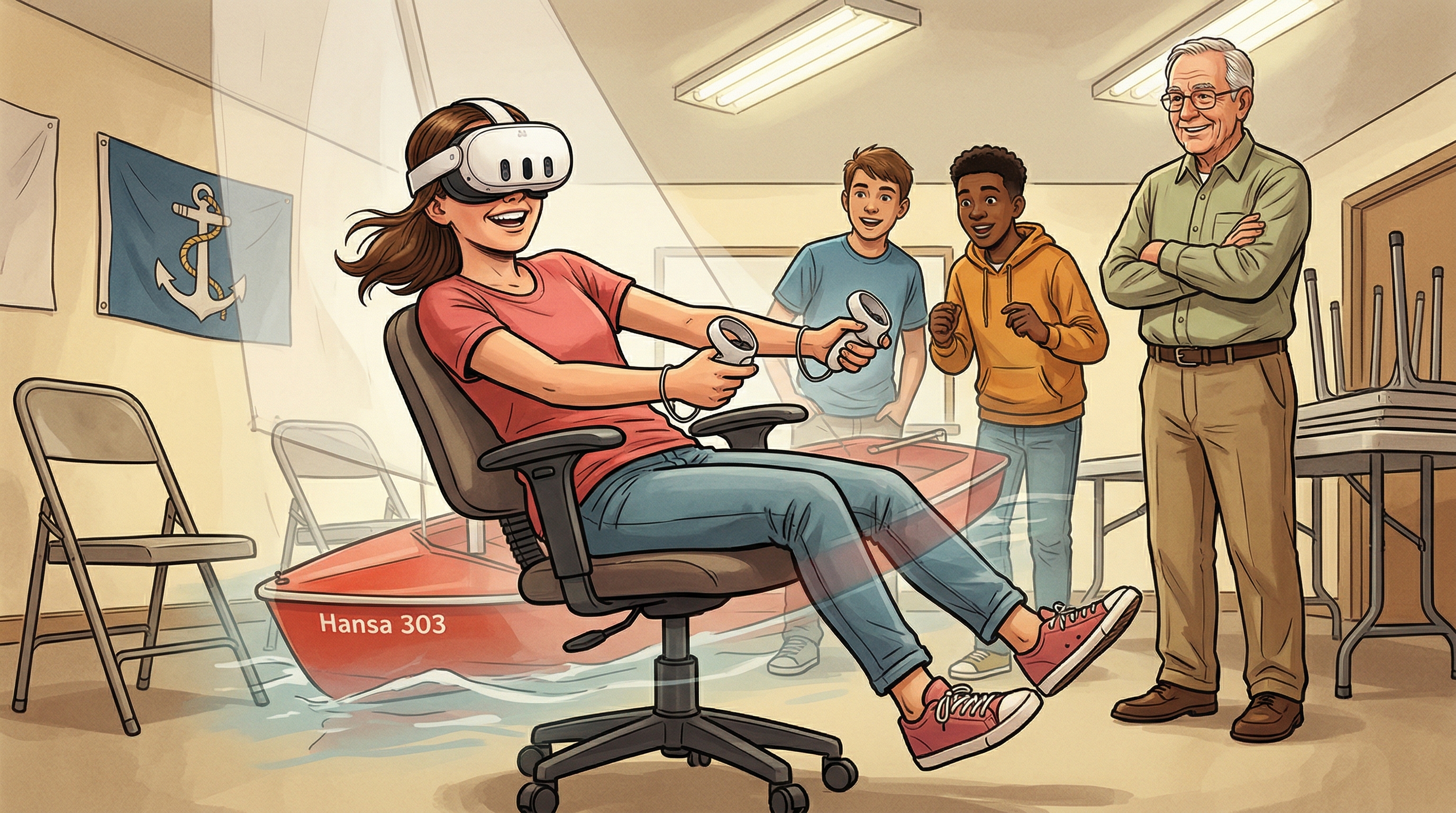
Sea Scout Ship 2028 S.S.S. Polaris utilized MarineVerse Sailing Club to provide basic sail training to its members from December 2025 to February 2026. Situated in the western suburbs of Chicago, the Ship has no access to on-the-water sailing for more than half of the year. VR offered an opportunity to provide realistic training during the winter months.
Setup and Approach
Ship 2028 has 18 registered members. Four have had formal instruction at a sailing camp. The rest had not sailed before. Three Meta Quest 2 headsets were available for shared use. The owners of the three sets were all experienced both at sailing and use of the VR system.
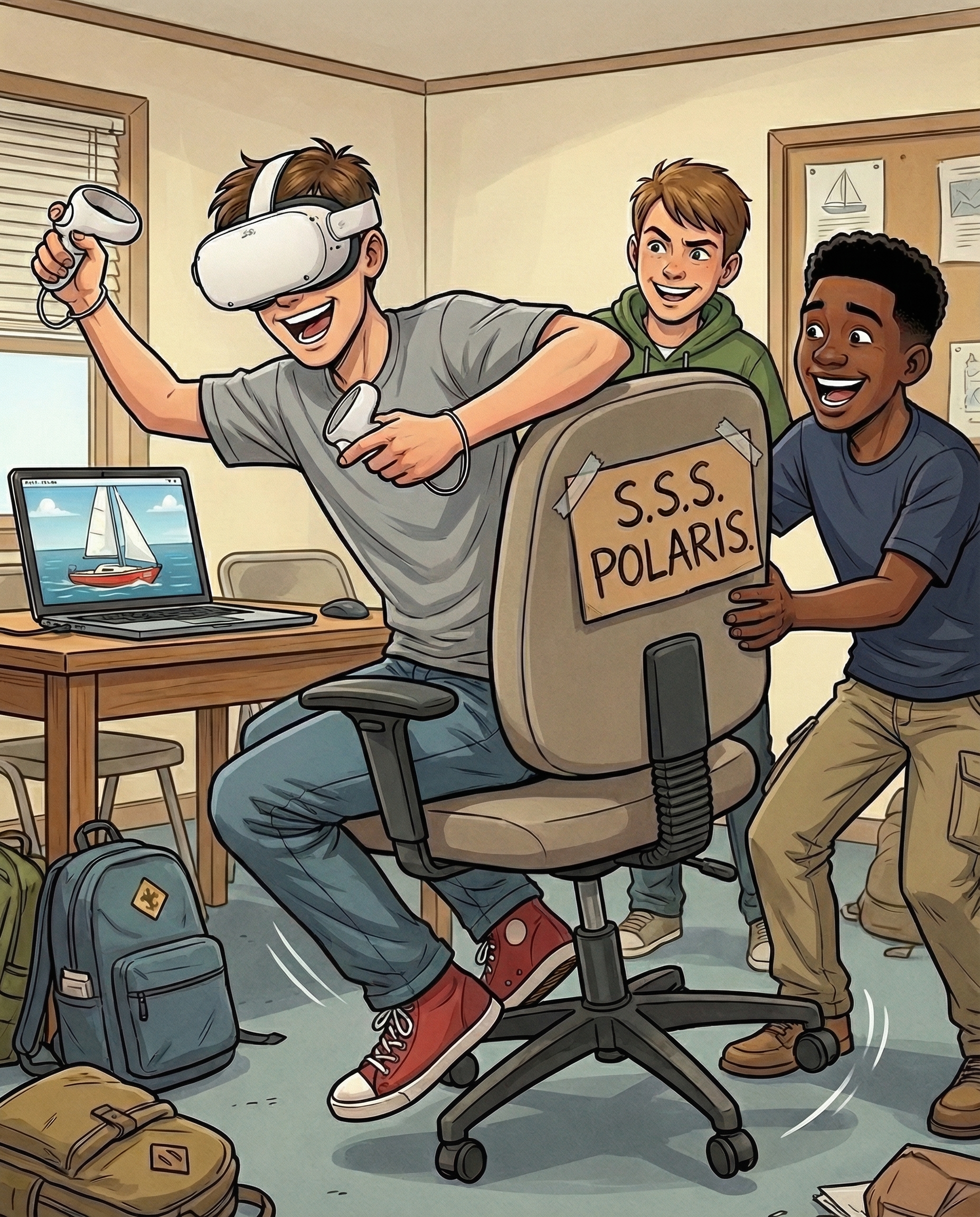
The systems were used at six meetings. Each Scout used the system for approximately ten minutes and was coached by the experienced sailor/owners before passing it on to another. In aggregate, they each completed about an hour of use.

One headset was linked to a notebook computer, which a coach could monitor and use to tutor the sailor using the headset.
The VR application includes a series of vessels and rigs progressing in size from a single seat one-sail dinghy up to a large catamaran. A racecourse is charted and users may compete against themselves or with others either synchronously or asynchronously. The Scouts limited their practices to the single seat small boat due to time limitations.
What the Scouts Learned
Scouts learned points of sail, boat and sail parts, and the basics of maneuvering under sail. The experience was considered realistic. The only complaint was the lack of a sense of water motion - and that a minor one; by sitting in a swiveling office chair with a rocking capability, this problem was eased.
Reception and Usability
Overall, utility and acceptance were high. A few Scouts hesitated to use the technology as it was new to them, but after trying it found it easy to learn and fun to use. The software was easy to download, intuitive and user friendly.
Value for Youth Sailing Education
For our purpose, having a hands-on simulation available in the winter to give potential sailors a sense of the sailing experience was very valuable. Traditional online e-learning courses are more theoretical and two-dimensional - they teach the concepts, but the “feel” and “sense” of sailing is missing. VR bridges that gap between book or online theory and real time on the water, letting you practice without needing access to water. As a teaching aid, it appeals to teenagers in a way that textbooks and videos simply don’t.
Challenges: Scalability and Cost
The two issues are scalability and price. Since we had only three headsets and 18 youth, the time each could spend was limited. Adding a fully equipped setup would cost roughly US$350-400 apiece ($299 for a headset, $29.99 for the app, plus $99/year if using pro features like docking practice). As the current Scouts age out, we will lose access to these three and would need to find replacements.
The second is the cost of the software. While it is reasonable for regular use, the challenge for our unit is that we were only able to use it six times. We would likely use it more if we had more headsets. Now as we transition into spring and we will be outside, I don’t expect to use the VR software again until the end of sailing season in October/November. I do envision it as a potential way to follow up with the regular sailing season and move the Scouts to the next skill level.
Conclusion
On the whole I found it a very helpful experiential learning tool and highly recommend it for use to both novice and experienced sailors.
Our Thoughts and Next Steps
- Greg, MarineVerse
We’re grateful to Don and the S.S.S. Polaris crew for sharing this honest and detailed assessment. The feedback on both the strengths and the challenges is exactly what helps us make MarineVerse better for groups like this.
On the topics Don raised:
A note on pricing - The base version of MarineVerse Sailing Club is a one-time purchase of $29.99 and includes sailing tutorials, basic racing and exploration mode - plenty for casual use and getting started. For those who want to go deeper, our optional Club membership ($99/year) unlocks pro features like docking practice, pro-level racing competition, and advanced experiences like the Globe offshore sailing simulation. We also understand that a yearly subscription doesn’t always fit seasonal use patterns. We’re open to working out arrangements that make more sense for youth sailing organizations - if you’re interested, reach out and let’s figure out what works for your group.
Headset costs - Hardware is the biggest barrier. It’s worth noting that MarineVerse Sailing Club is also available on PC (Mac and Windows via Steam), so it’s possible to experience the simulation without a headset - but VR is strongly recommended as the immersive experience is on another level entirely. For organizations looking to scale up VR access, partnerships with headset manufacturers or retailers could help bring per-unit costs down, and sponsorship is another option worth exploring.
Winter Practice is Catching On Around the World
It’s not just Sea Scouts in Chicago. In Poland, primary school students are using MarineVerse in the classroom to prepare for their summer sailing camps - practicing the basics of sail trim and boat handling months before they get near the water.
From the suburbs of Chicago to classrooms in Poland, a pattern is emerging: VR sailing is becoming a practical tool for organizations that want to make the most of the off-season and get their sailors ready for the water.
Want to Try VR Sailing With Your Group?
If you lead a sailing club, Sea Scout ship, youth sailing program, or any organization that could benefit from VR sailing training - we’d love to help you get started. Whether it’s winter training, onboarding new sailors, or supplementing your on-the-water program, we can work together to find an approach that fits your needs and budget.
Get in touch at [email protected] - let’s talk about how MarineVerse can work for your group.